Lisbon › Trams and trains
Is Lisbon too hilly to walk?
No, but plan your routes. Lisbon's hills are short and steep rather than long, and the city gives you trams, funiculars, a lift and a metro to cheat with. Walk down, ride up.
When that changes: With limited mobility, a heart condition or a pushchair, the steepest districts are genuinely difficult; wet weather makes the polished stone pavements slippery for everyone.
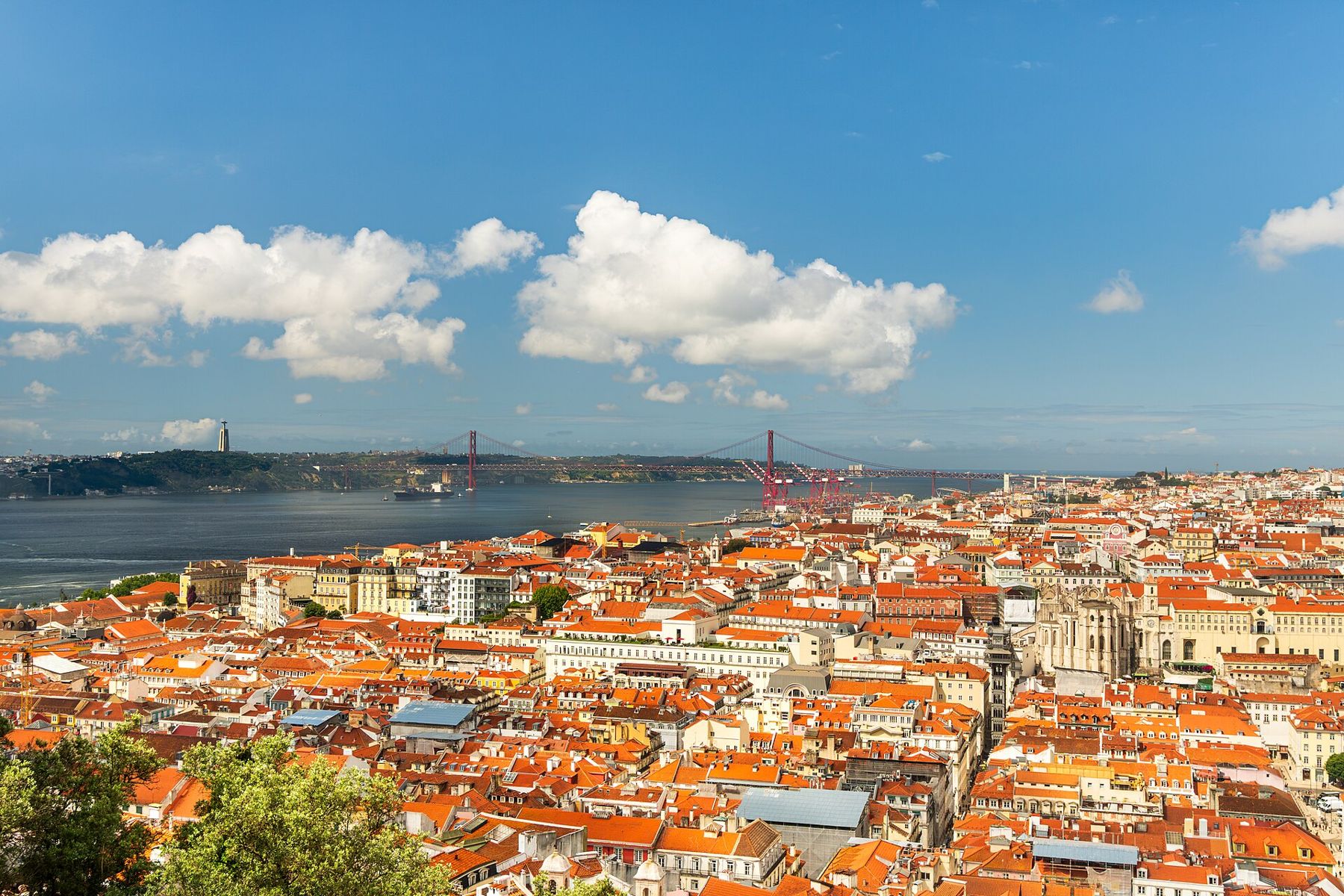
No, but you should plan your routes. Lisbon is built on a set of steep hills around a flat valley, and some streets climb hard enough to leave anyone breathless. The climbs are short, though, rarely more than ten or fifteen minutes, and the city has trams, funiculars, a famous lift and a metro to take you up. The rule that makes Lisbon easy is simple: ride up, walk down.
Lisbon's shape: a valley between hills
Lisbon is often called the city of seven hills, though the count depends on who is counting. In the middle lies the Baixa, the low, flat grid of streets rebuilt after the great earthquake of 1755, running from the riverside square of Praça do Comércio inland to Rossio. It is easy walking. On either side the ground rises steeply: to the east, the hill of the castle with the old Alfama district below it; to the west, the Chiado and Bairro Alto, and beyond them more hills.
That means almost any walk between neighbourhoods involves going down into the Baixa and up the other side, or contouring around a hill on its slope.
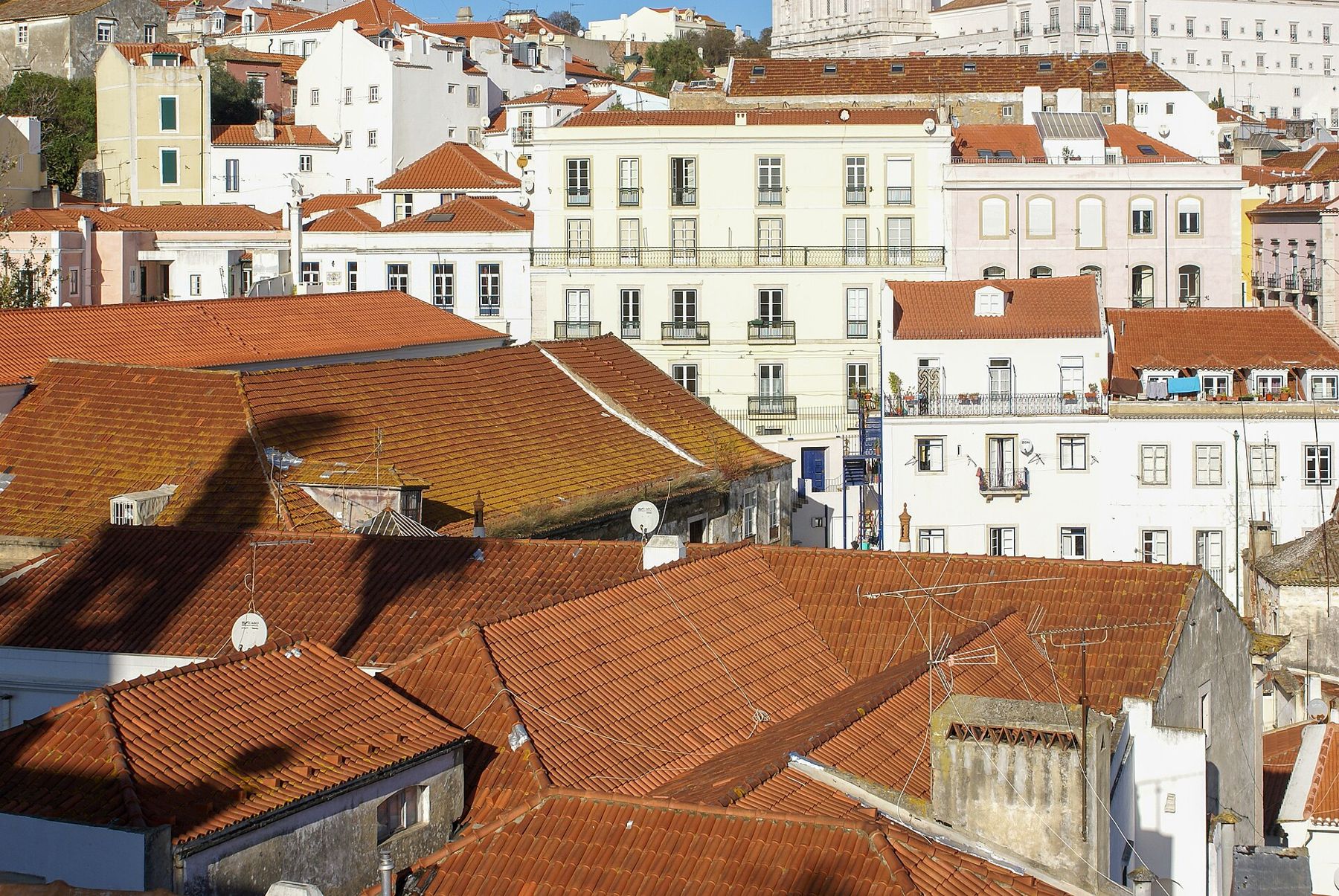
The calçada problem
The hills are only half the challenge. Lisbon's pavements are made of small, polished limestone and basalt cubes laid in patterns, the calçada portuguesa. They are beautiful and very slippery, especially when wet and on slopes. Wear shoes with real grip rather than smooth soles, and slow down on the steepest descents, where locals hold rails when there are any.
Ride up, walk down
The best walking routes in Lisbon start at the top. A few examples:
- Take a tram or taxi up to the Castelo de São Jorge or the Graça viewpoint, then walk down through Alfama's lanes to the river.
- Ride the Glória funicular up to Bairro Alto, look out from the São Pedro de Alcântara viewpoint, then walk down through Chiado to the Baixa.
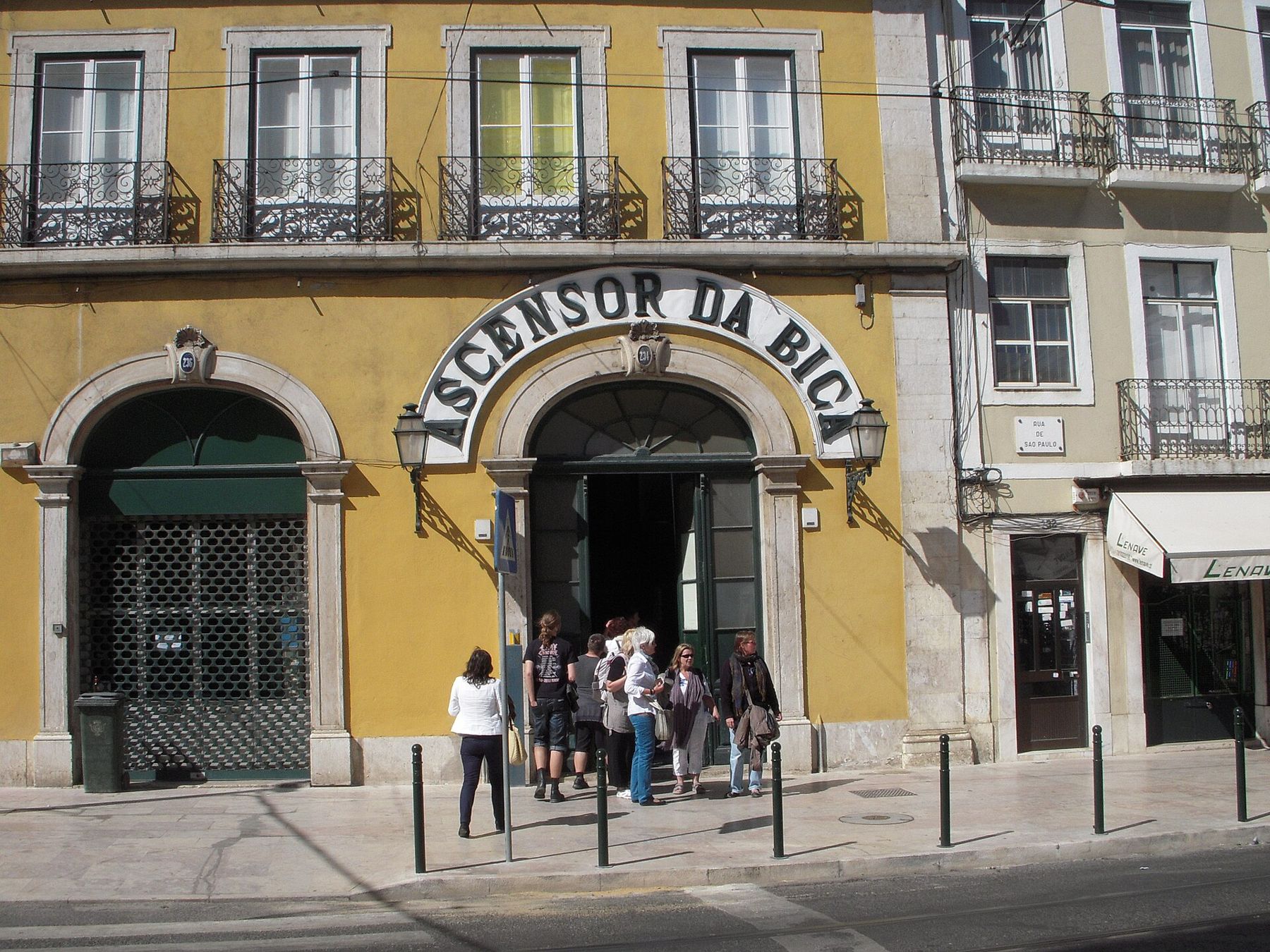
- Take the Bica funicular up from near the river to the top of its street, then wander back down through the neighbourhood.
Trams, funiculars and the lift
Lisbon's historic yellow trams climb streets that look impossible. The most famous line, tram 28, runs from the Graça and Alfama area through the Baixa and up to the western hills. It is useful and atmospheric, but also extremely crowded with visitors at most times of day, and a known spot for pickpockets. Ride it early or late if you want a seat.
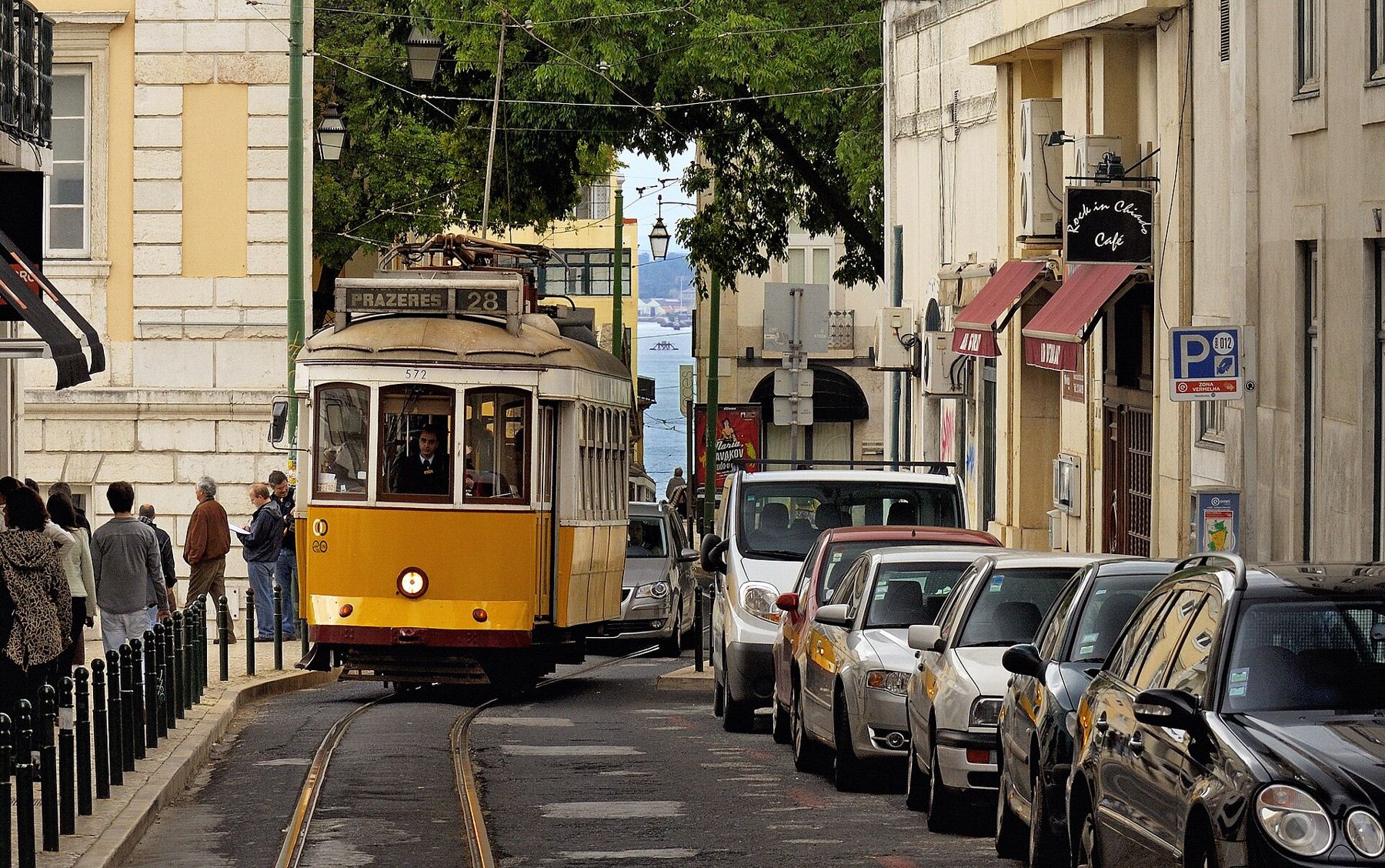
Three funiculars, the Glória, Bica and Lavra, climb short, steep streets. The Santa Justa Lift, an iron tower of the early 1900s, connects the Baixa with the Chiado area above. Queues for the lift can be long; the same height can be reached on foot through nearby streets in a few minutes.
The metro is the least romantic and most practical way to cover longer distances, and several stations bring you up to hilltop districts. Single tickets, rechargeable cards and day passes are available; fares and arrangements change, so check the current options.
The rule that makes Lisbon easy is simple: ride up, walk down.
The viewpoints are the reward
Lisbon's hills give it dozens of miradouros, public viewpoints with benches and wide views over the roofs and the river. The Senhora do Monte and Graça viewpoints look over the whole city from the northeast. Santa Luzia and Portas do Sol, just below the castle, look straight down over Alfama to the water. São Pedro de Alcântara, at the top of the Glória funicular, faces the castle across the valley. Each one makes a natural pause in a climb, and most are free.
Neighbourhood by neighbourhood
- Baixa and Rossio: flat, gridded, easy.
- Alfama: steep, stepped and maze-like; wonderful to wander downhill.
- Castle hill: the steepest climb in the centre; ride up.
- Chiado and Bairro Alto: a sharp climb from the Baixa, then mostly level on top.
- Belém and the riverside: flat and open, the easiest long walk in the city.
Distances between districts are short on a map, often under two kilometres. The hills, not the distances, decide how long a walk takes.
Who will find it hard
For most reasonably fit visitors, Lisbon's hills are part of the fun, rewarded by viewpoints at the top. For people with limited mobility, heart or breathing conditions, or a pushchair, the old districts are genuinely difficult: steps, steep cobbles and narrow pavements. Base yourself in the flatter Baixa or along the river, use taxis for the hills, and focus on viewpoints you can reach by vehicle.
In summer, the climbs are hotter; walk in the morning and evening. In winter, rain makes the stone slippery: see whether Lisbon is worth visiting in the rain.
Whatever your fitness, pace yourself. Stop at a viewpoint, sit on a bench, step into a church to cool off. Lisbon is a city of pauses, and the hills make sure you take them.
Evenings bring another reason to climb: the views at sunset from the western viewpoints, as the light turns the roofs and the river gold, are among the finest city views in Europe.
Leaving the hills behind
When you want flat walking, follow the river west toward Belém, where the riverside path is level and open. And for a day out of the city, the train to the coast or the hills is easy: see Sintra or Cascais for a day trip.
Next question: Sintra or Cascais for one day trip from Lisbon?