Lisbon › Trams and trains
Sintra or Cascais for one day trip from Lisbon?
Sintra if you want palaces, gardens and forested hills; Cascais if you want the sea. Both are on direct trains from central Lisbon, so the choice comes down to what kind of day you want.
When that changes: On a hot summer day, or if you have already seen grand palaces elsewhere, Cascais and the coast make the better choice; with two free days, do both.
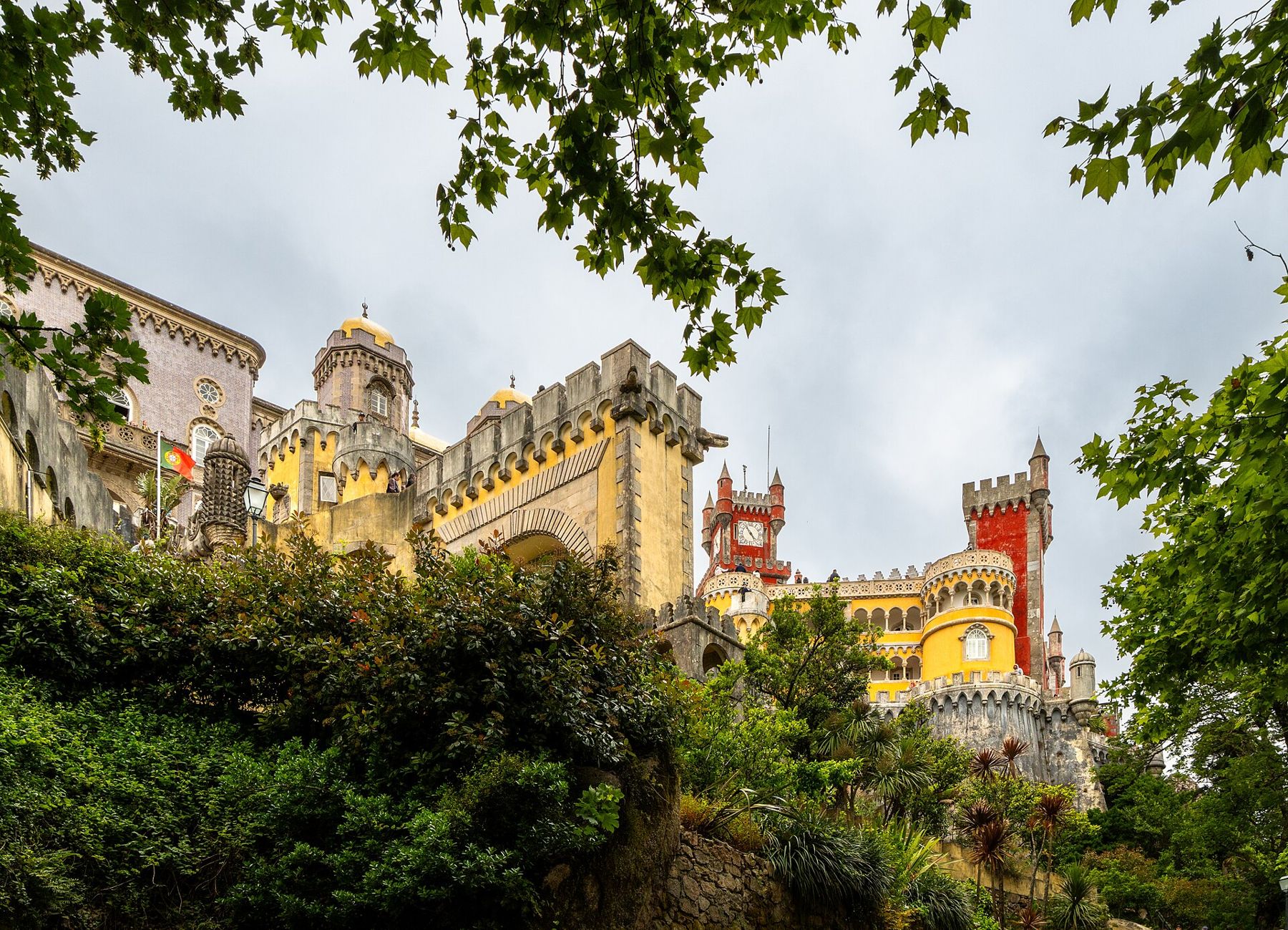
For most first-time visitors, Sintra. Its fairy-tale palaces, Moorish castle walls and misty forested hills are unlike anything in Lisbon, and the whole area is a UNESCO-listed cultural landscape. Cascais is the better pick if what you want is the sea: a relaxed former fishing town with beaches, a promenade and Atlantic cliffs. Both are about forty minutes by direct train from central Lisbon, and with an early start and a little stamina you can even combine them.
Sintra: palaces in the hills
Sintra sits in a range of wooded hills west of Lisbon, where kings and aristocrats built summer retreats for centuries. The climate is cooler and damper than the city, and mist often hangs on the ridges, which only adds to the atmosphere.
The highlights are spread out:
- Pena Palace, a nineteenth-century Romanticist fantasy of yellow, red and grey towers on a hilltop, built for King Ferdinand II, surrounded by a large park.
- The Moorish Castle, a line of medieval walls snaking along the ridge, with views to the ocean on a clear day.
- Quinta da Regaleira, an estate with gardens, grottoes and a spiral initiation well that descends deep into the ground.
- The National Palace in the town centre, recognisable by its two huge conical chimneys.

You will not see all of them in one day without rushing. Choose two or three, and book timed tickets for Pena in advance where possible; ticketing rules change, so check the official sites.
Cascais: the sea and the town
Cascais lies at the end of the coastal railway line, where the estuary of the Tagus meets the Atlantic. Once a fishing village, it became a fashionable resort in the late nineteenth century and keeps an easy, holiday feel. The old centre has squares paved with wave-patterned stone, small beaches tucked between rocks and a marina.
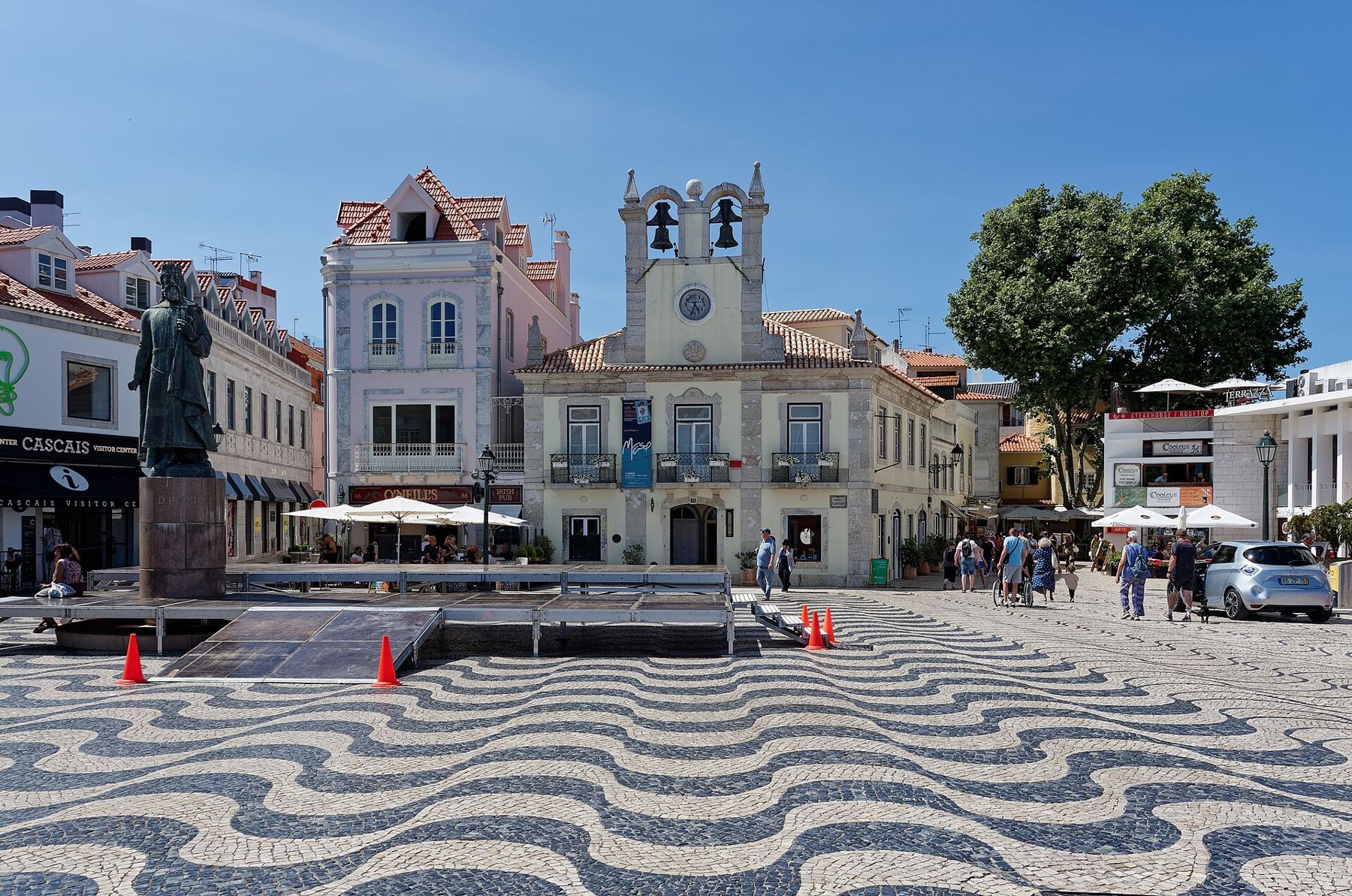
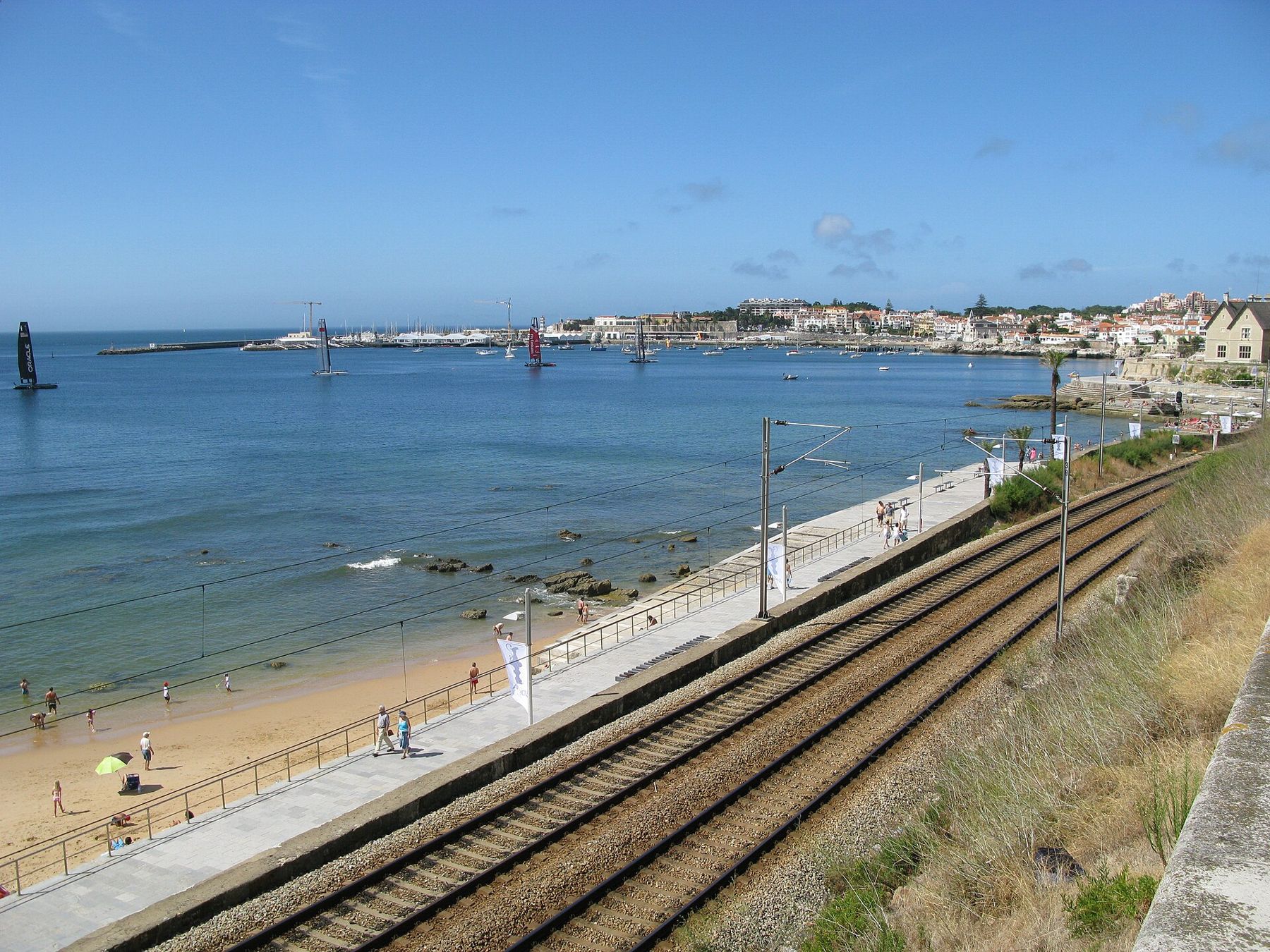
Walk west along the coast road to the Boca do Inferno, where the sea surges into a collapsed cave in the cliffs, or follow the promenade east to Estoril. The train ride itself is part of the pleasure: for much of the way it runs right along the water.
How the two compare
| Sintra | Cascais | |
|---|---|---|
| Best for | Palaces, gardens, history, forest | Sea, beaches, a relaxed town |
| Train from Lisbon | From Rossio, about 40 minutes | From Cais do Sodré, about 40 minutes |
| Crowds | Very busy, especially at Pena | Busy on summer weekends |
| Walking | Steep hills between sights | Mostly level along the sea |
| Weather | Cooler, often misty | Sunnier, breezy |
Journey times are approximate and timetables change; check the current schedules.
Getting around once you arrive
In Sintra, the palaces are on hills well above the town, linked by steep roads. Local buses run loops between the station, the town and the main sights; they are useful but crowded, and the queues at peak times are long. Walking up is possible on forest paths for the fit, but allow time. Sintra's centre is congested with traffic, so driving yourself is rarely a good idea.
In Cascais, everything central is walkable, and the coastal promenade is flat.
Cascais is the better pick if what you want is the sea: a relaxed former fishing town with beaches, a promenade and Atlantic cliffs.
Which months work
Sintra is busiest from late morning to mid-afternoon, especially at Pena, and on weekends and holidays. Take one of the first trains of the day and head straight to the sight you care about most. The hills are cooler than Lisbon, sometimes much cooler, and fog or drizzle can roll in even in summer: bring a layer.
Cascais is best on a clear day, when the sea sparkles and the walk to the cliffs is a pleasure. In midsummer the small beaches are crowded, and on hot weekends the trains fill with people heading for the sand. Spring and early autumn are ideal for both places.
Costs and tickets in general
The train fares to both are modest. Sintra's palaces each charge their own entry, and visiting several adds up; combined tickets are sometimes offered. Cascais costs little beyond the train unless you visit its museums. Prices change, so check current fares and tickets before you go.
Doing both in one day
It can be done. Start early in Sintra, see Pena and one other sight, then take the bus over the hills and along the coast to Cascais, passing near Cabo da Roca, the westernmost point of mainland Europe. Finish with the evening light on the sea and the train back to Lisbon along the estuary. It is a long, full day, best for people who enjoy moving.
Whichever you choose, check the time of the last trains back to Lisbon before you set out, and leave a margin: the evening light on the coast or the hills tends to make people linger.
Food is part of both trips, from Sintra's famous pastries to fish grilled near the harbour in Cascais. This guide names no particular places, but neither town will leave you hungry.
The verdict by traveller
History and architecture lovers: Sintra. Beach lovers and anyone visiting in a heatwave: Cascais. Families with small children may prefer Cascais's flat walks and sand. If you have two days to spare, give each its own day and enjoy both without rushing. For how to handle Lisbon's own hills before you go, see whether Lisbon is too hilly to walk, and for a wet-weather plan, Lisbon in the rain.
Next question: Is Lisbon worth visiting in the rain?