Kyoto › What time to go
What time should you get to Fushimi Inari?
Before 8 am, or after 5 pm. The shrine grounds stay open around the clock and entry is free, so the only thing that decides how crowded the torii tunnels feel is when you arrive.
When that changes: If you only have the middle of the day, climbing past the halfway crossroads still gives quieter paths; in deep winter darkness falls early, so evening visits start sooner.
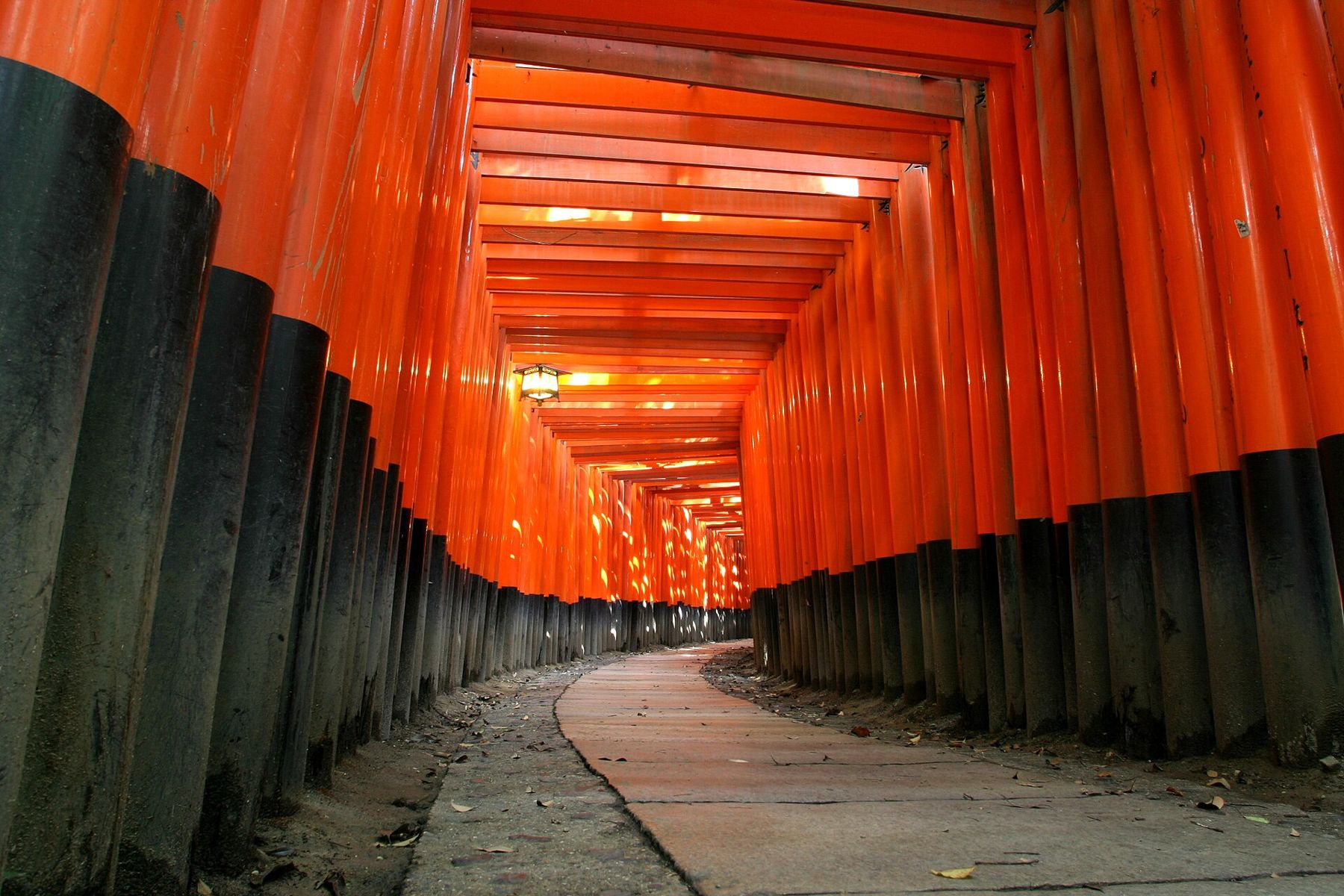
Before 8 am, or after about 5 pm. Fushimi Inari Taisha does not close: the grounds and the mountain paths are open around the clock, and there is no entry fee. That means the crowds are set entirely by the timetable of the tour buses and day-trippers, who arrive from mid-morning and leave by late afternoon. Come early and you can walk the famous tunnels of orange gates almost alone.
Why the time matters so much
Fushimi Inari is one of the most visited places in Japan. The shrine, founded in the early eighth century, is the head shrine of Inari, the deity associated with rice, harvests and prosperity. Its fame comes from the torii: thousands of vermilion gates, donated over the centuries by individuals and companies, that line the paths up Mount Inari, often so close together that they form tunnels.
The densest stretch, the Senbon Torii, starts just behind the main buildings, and that is where everyone gathers. Between about ten in the morning and four in the afternoon, the tunnels can be packed shoulder to shoulder. At seven in the morning, the same paths are quiet, the light filters through the gates and you hear birds and the crunch of gravel.
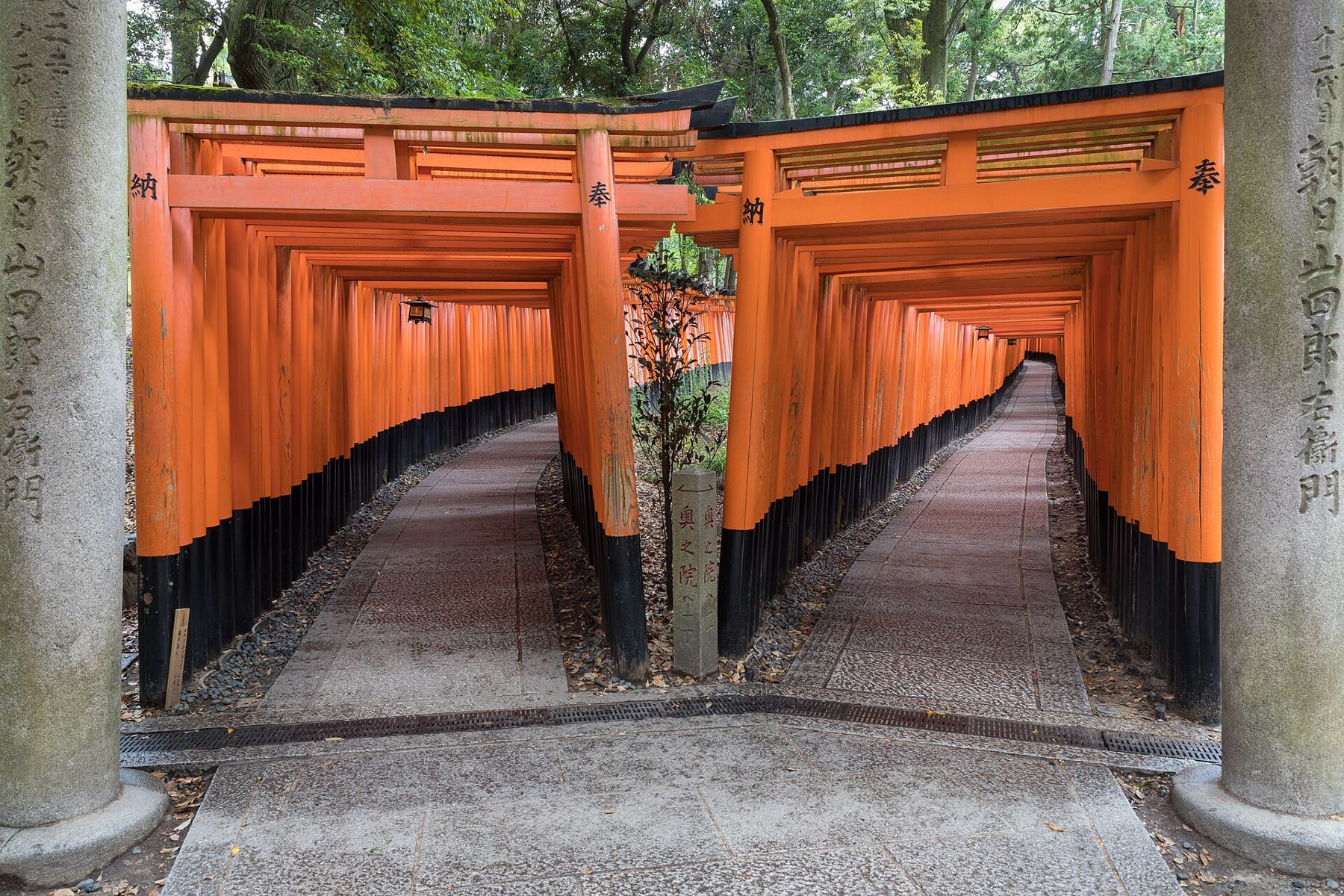
Early morning
The first trains of the day reach Inari Station, just across the road from the shrine entrance, early in the morning. Arriving around sunrise or soon after gives you the best chance of empty tunnels. Shrine staff and local walkers will already be about, and some of the shrine buildings may not be open yet, but the paths are.
Early morning is also the coolest time, which matters in summer, when the climb in heat and humidity is hard work.
Come early and you can walk the famous tunnels of orange gates almost alone.
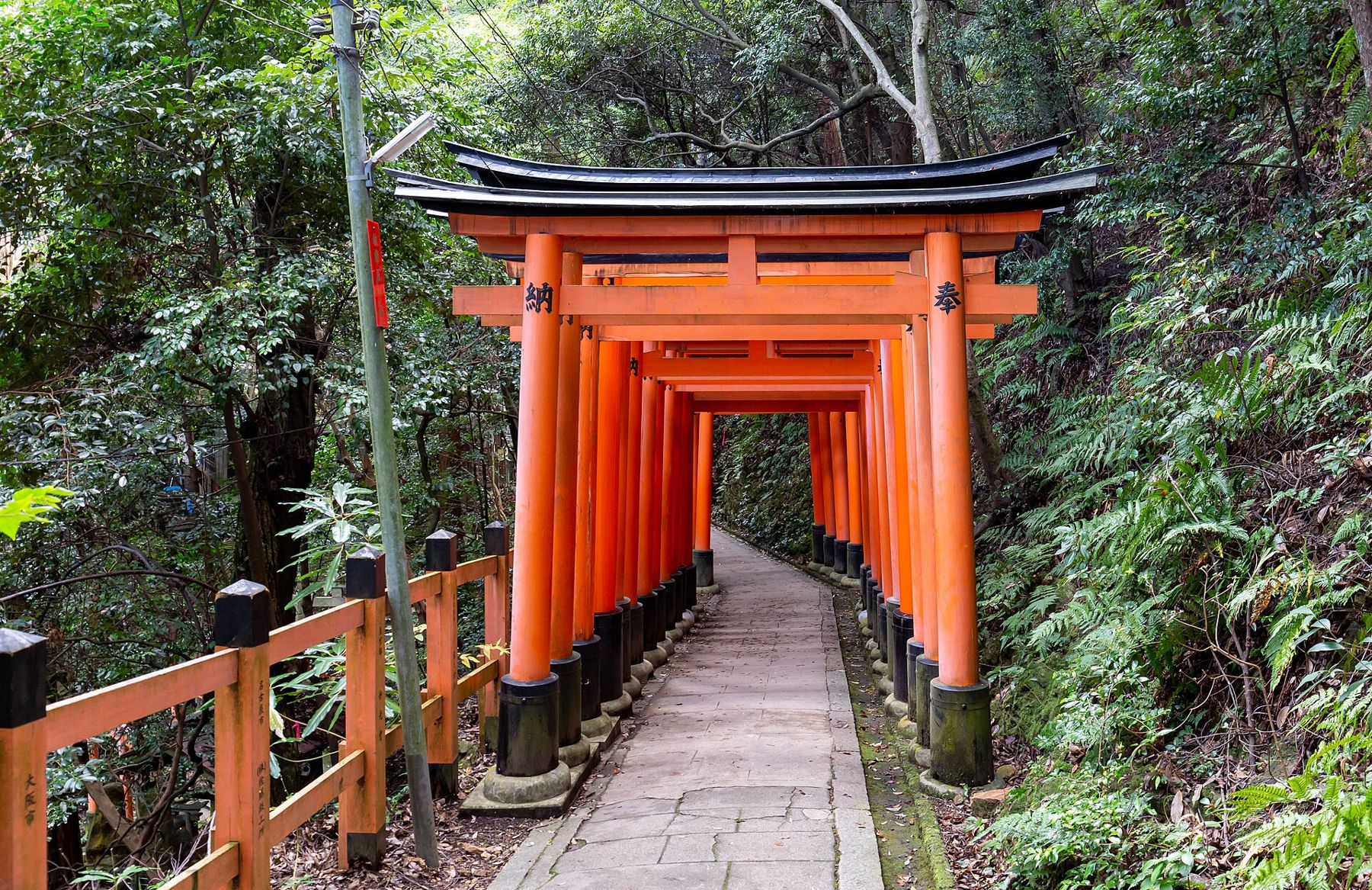
Evening and after dark
The second quiet window opens in the late afternoon, as the day visitors leave. After dark the paths are lit by lanterns, and the atmosphere changes completely: the gates glow, the forest closes in and the crowds thin to a few walkers. The upper paths are dimly lit in places, so bring a light and keep to the main routes. Small creatures, including spiders and insects, are about in the warmer months.
How far up to go
Most visitors walk only the first section, through the Senbon Torii to the inner shrine, and turn back. That takes half an hour or so. The full loop to the summit of Mount Inari, at a little over 230 metres, takes around two to three hours at an easy pace, with plenty of steps.
A good compromise is to climb to the Yotsutsuji crossroads, roughly halfway up, where there is a viewpoint over southern Kyoto and a place to rest. Above Yotsutsuji, the crowds fall away sharply, even in the middle of the day. If you arrive late, climbing past this point is the best way to find quiet gates.
The small print
- The shrine is right next to JR Inari Station on the Nara Line, and a short walk from Fushimi-Inari Station on the Keihan Line. Timetables change, so check the morning's first trains.
- Entry to the grounds is free. Small shops along the lower path sell drinks and snacks during the day, but not at dawn; carry water.
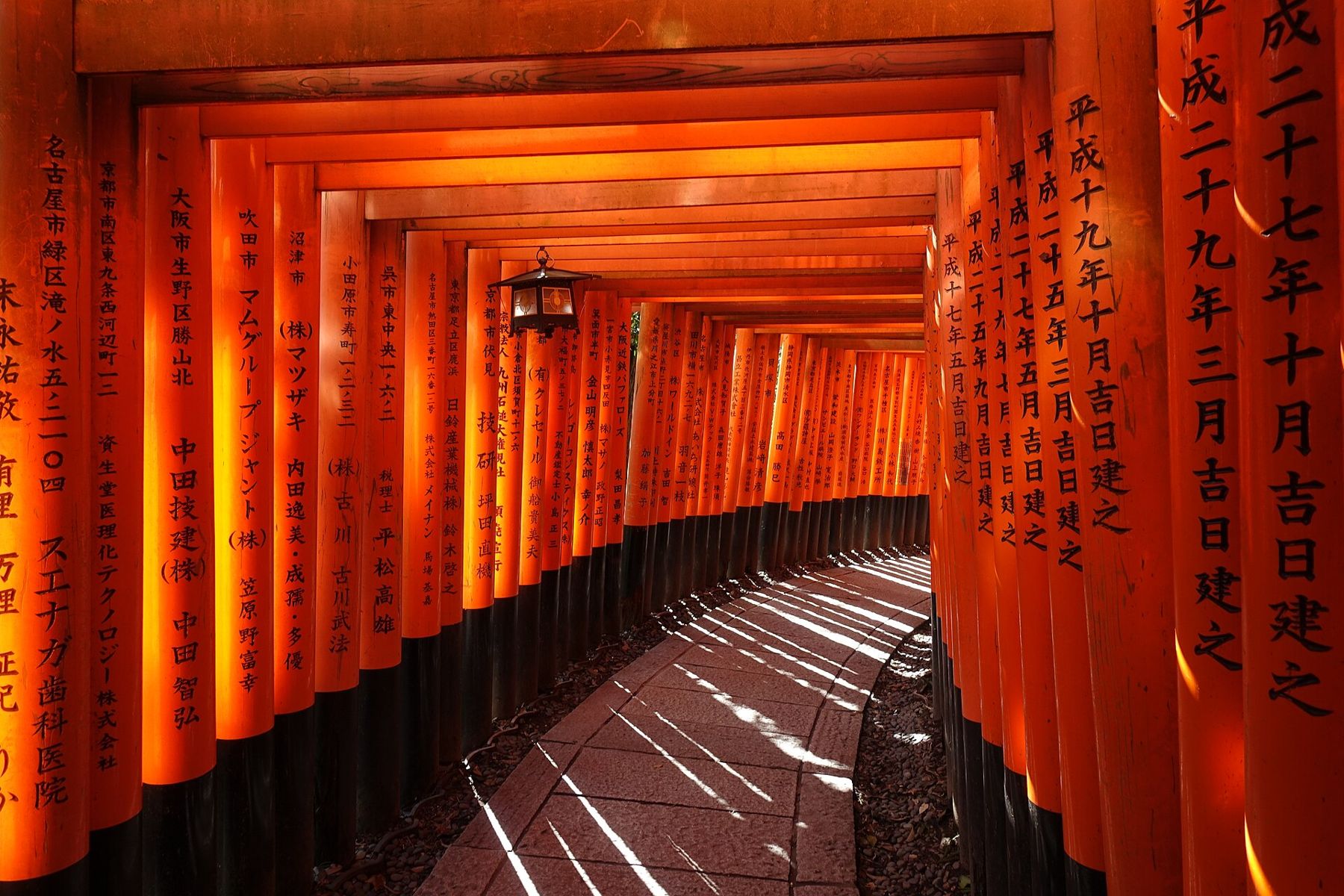
- The gates carry inscriptions with the donors' names and dates. They are part of the shrine, so do not lean on, climb or write on them.
- Fushimi Inari is an active place of worship. Keep voices down near the prayer halls, and let people praying go first.
- New Year is the busiest time of the year by far, with crowds at almost any hour in the first days of January.
The foxes and the gates
As you climb, look at the stone foxes that guard the shrines along the way. Foxes are regarded as messengers of Inari, and they often hold a key, a jewel or a scroll in their mouths. Small shrines along the paths carry piles of miniature torii, left as offerings, and in places the gates thin out and the path becomes a forest trail with steps.
The inscriptions on the back of each gate record who donated it and when. Larger gates cost more, and the donors range from families to large companies. Reading a few of them, you get a sense of how much the shrine means to people who still pray here for good fortune in business and life.
Time by season
Sunrise in Kyoto ranges from before five in early summer to around seven in midwinter, so the best early slot moves through the year. In summer, arrive at dawn for both light and coolness. In winter, a nine o'clock arrival is still quieter than midday, and evenings come early. Spring and autumn weekends are the busiest of all, so an early start matters most then.
What to expect on the climb
The path is paved or stepped most of the way, and it is steep in places. Above the main tunnels, the route becomes a loop around the summit with several small shrines, tea-house stops and long flights of steps. Allow more time than the distance suggests, and turn back whenever you have had enough: there is no need to reach the top to see the best of the gates.
Small shops and rest stops along the upper path open later in the morning and close in the late afternoon, so early and late visitors should carry water and snacks. The upper path has few toilets, and those it has may be closed at night. Wear shoes with grip; the steps can be slippery after rain, and moss grows on the stone in shaded sections.
With children, the lower section is easy and fun; the full loop is long for small legs. Pushchairs are impractical beyond the first stretch because of the steps.
Whatever time you come, step off the main path now and then. Side paths lead to quiet sub-shrines and graves among the trees, where you may find yourself completely alone even on a busy day.
Fitting it into a day
An early visit to Fushimi Inari pairs well with the rest of southern or eastern Kyoto. After a dawn walk, you can be at Tofuku-ji or on your way to Higashiyama by mid-morning. For planning the whole city, see how many days in Kyoto is enough, and for the summer question, whether Kyoto is worth it in August. The same early-start logic works at Dubrovnik's city walls.
Next question: Is Kyoto worth it in August?