Seville › How many days
How many days do you need in Seville?
Two full days cover Seville's great sights. A third lets you slow down, cross the river to Triana and see the city at night. Four or more and you can add a day trip.
When that changes: Travellers who want Córdoba, Cádiz or Jerez as day trips should plan four or five days; in the heat of July and August the same list needs more days.
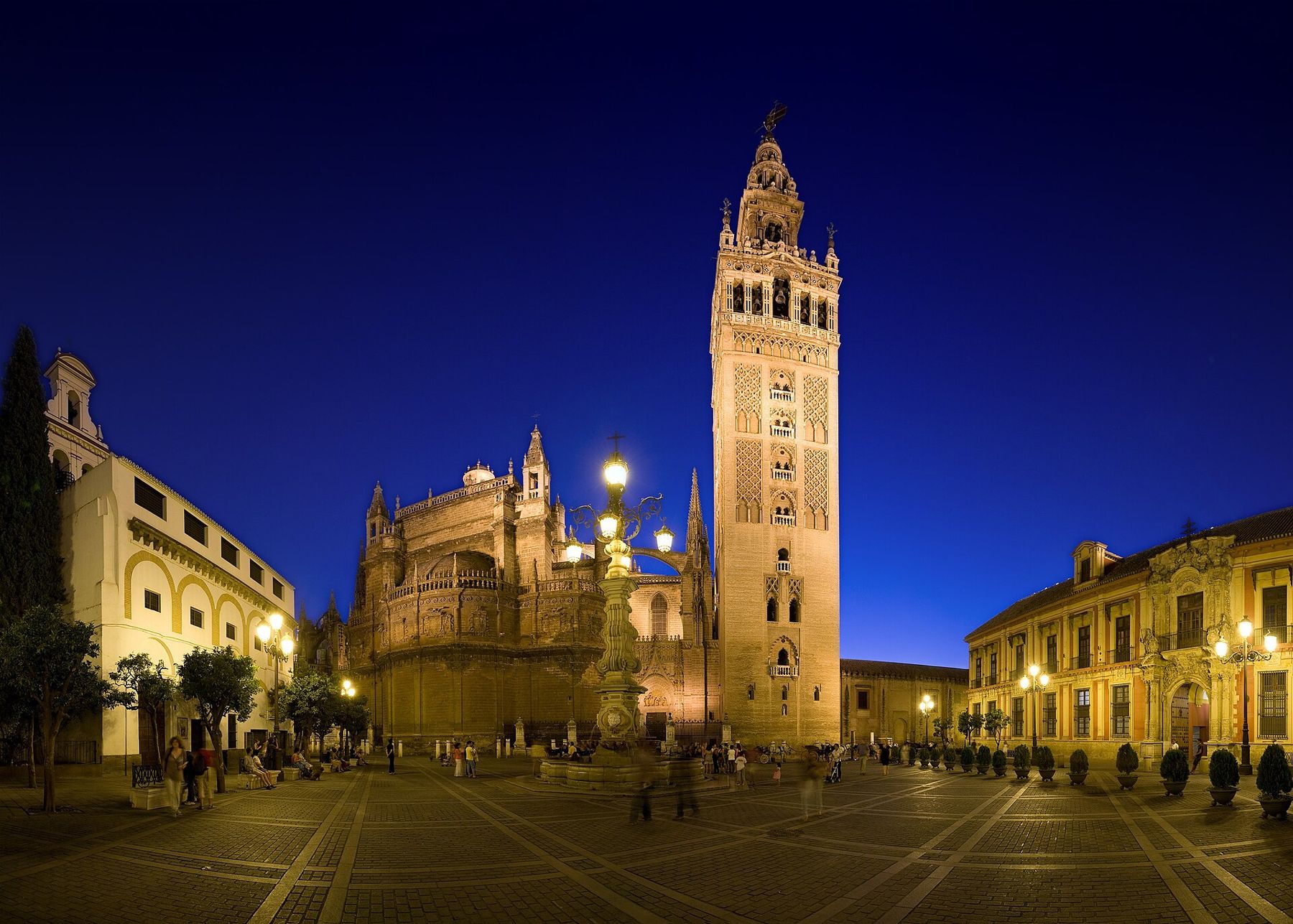
Two to three days. Two full days are enough to see the cathedral and its tower, the Real Alcázar, the Santa Cruz quarter and the Plaza de España without rushing. A third day turns a checklist into a visit: time for Triana across the river, an evening along the Guadalquivir and a slower look at the places you liked best.
Day one: the old centre
Start at the Real Alcázar in the morning, ideally with a timed ticket booked in advance. The royal palace grew over centuries, from Islamic foundations to the Mudéjar halls of Christian kings, and its gardens are some of the loveliest in Spain. Allow two to three hours.
Next door, Seville Cathedral is one of the largest Gothic churches in the world. Inside are the tomb monument associated with Christopher Columbus and a sequence of chapels that takes hours to see properly. Climb the Giralda, the former minaret turned bell tower, by its ramps rather than stairs: the view over the city's roofs is the best orientation you will get.
Spend the evening getting lost in Santa Cruz, the old Jewish quarter, with its narrow lanes, small squares and orange trees.
Day two: parks, plaza and the river
Walk south to María Luisa Park and the Plaza de España, built for the 1929 Ibero-American Exposition. The semicircular plaza, with its canal, bridges and tiled alcoves, is free to wander. The park around it is shaded and green, a good place for the hot part of the day.
In the afternoon, visit one of the city's museums, or the Metropol Parasol, the huge wooden canopy in the north of the old town with a walkway on top. Finish at the river, walking along the bank to the Torre del Oro, the thirteenth-century watchtower that once guarded the port.
Day three: Triana and slow time
Cross the Isabel II bridge to Triana, the neighbourhood across the Guadalquivir long associated with sailors, potters and flamenco. Look for the tiled façades of the ceramic workshops, the market by the bridge and the riverside street with its view back to the cathedral. Return for whatever you missed or loved: a second walk through the Alcázar gardens, a church or palace you passed on day one, an evening flamenco performance at a venue of your choosing.
Four days or more: day trips
Seville is a good base for the rest of Andalusia, and the train makes it easy.
- Córdoba: under an hour by high-speed train. The Mezquita, a great mosque with a cathedral built inside it, is reason enough. A full day is ideal.
- Cádiz: under two hours by train, an old port city almost surrounded by the sea, with beaches and a compact old town.
- Jerez de la Frontera: on the same line, known for horses, sherry and flamenco.
- Carmona: a hill town a short bus ride east, with Roman remains and views over the plain.
Timetables and fares change, so check the operators' current schedules before you go.
When fewer days work, and when they do not
One day in Seville is possible if you are passing through, but it means choosing between the Alcázar and the cathedral, and missing the city's evenings, which are a large part of its charm. Two days work well in spring and autumn.
In midsummer, when the middle of the day is too hot for sightseeing, the same plan needs more time. Add a day if you are visiting between late June and early September. During Holy Week and the spring fair, the city is crowded, some streets are closed for processions and everything moves slowly: more days help there too.
Booking and timing
The two biggest sights, the Alcázar and the cathedral, sell timed tickets, and in busy seasons the best slots go early. Book them first and build the rest of the day around them. Some sights offer free or reduced entry at certain times; those arrangements change and often have long queues, so check the official websites rather than relying on old advice.
Monday is a closing day for several museums in Spain, while churches have their own hours around services. Check before you plan a day around a particular place.
Where the evenings go
Whatever the length of your stay, keep the evenings free. Seville is at its best after dark: the cathedral and the Giralda are lit, the riverside fills with walkers, and in spring the smell of orange blossom hangs over the squares. Many visitors find that the city's evenings, more than any single sight, are what make them want to come back.
Distances on foot
Central Seville is compact and mostly flat, which makes it one of the easiest Spanish cities to walk. From the cathedral to the Plaza de España takes about twenty minutes; to Triana across the river, about the same. A tram line runs through part of the centre, and buses cover the outer districts, but most first-time visitors rarely need them. Comfortable shoes matter more than a transport pass.
A note on the weather
For whether your month is a good one, see whether May is too hot for Seville. For the plaza that ends up in everyone's photos, whether the Plaza de España is free. If you are comparing cities for a short break, the same question for Kyoto is answered in how many days in Kyoto is enough.
Next question: Can you walk into the Plaza de España for free?