Seville › What time to go
Can you walk into the Plaza de España for free?
Yes. Seville's grand semicircular plaza is public space inside María Luisa Park, and you can walk in and around it without a ticket. A few extras, like the canal boats, cost money.
When that changes: Boat hire on the canal costs money, and some parts of the buildings are offices closed to visitors. Events occasionally restrict access to sections of the square.
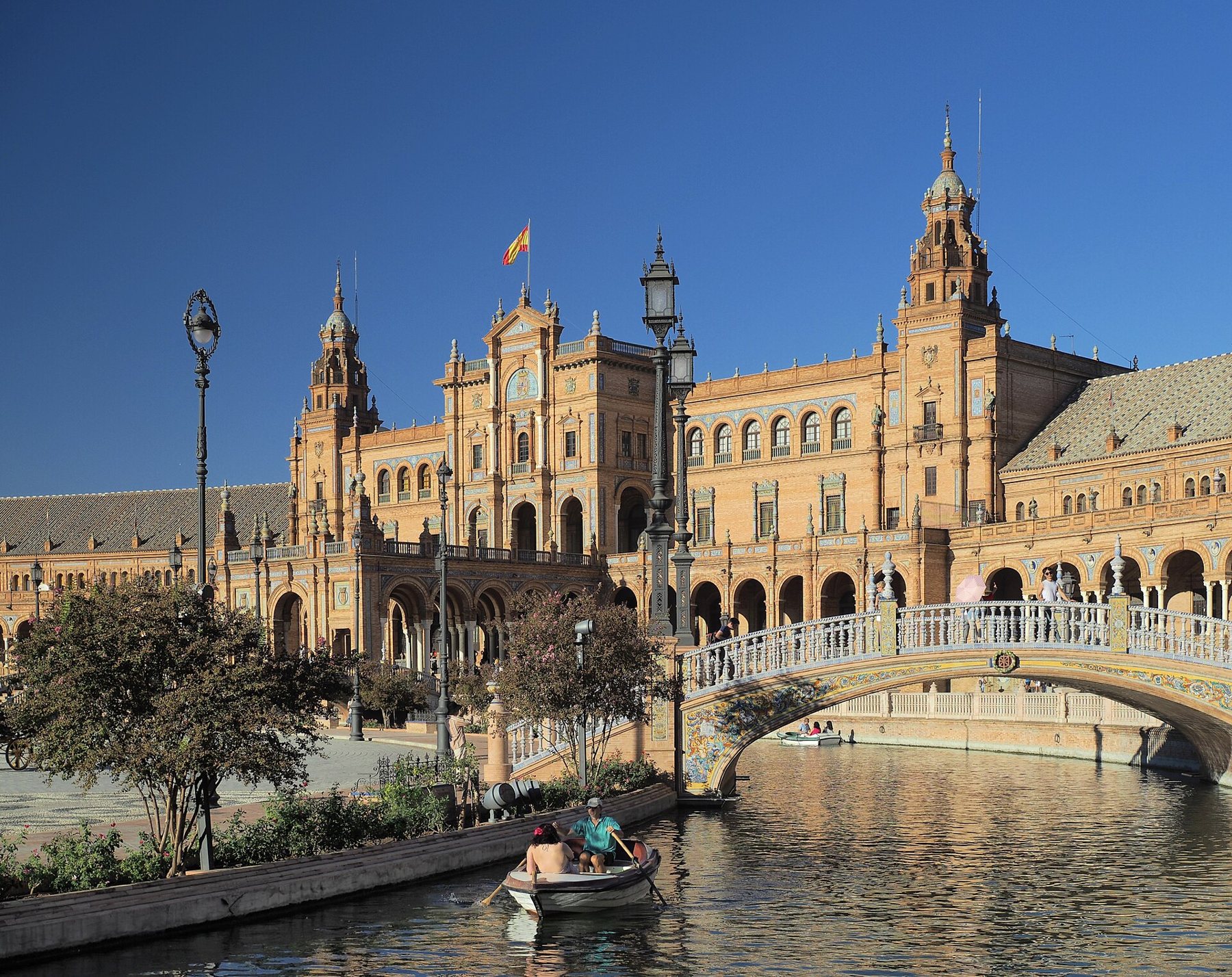
Yes. The Plaza de España is a public square inside María Luisa Park, and walking in, around and across it costs nothing. There are no gates and no ticket office for the plaza itself. You only pay if you choose an extra, such as a rowing boat on the canal, and parts of the buildings are working offices not open to visitors.
What the plaza is
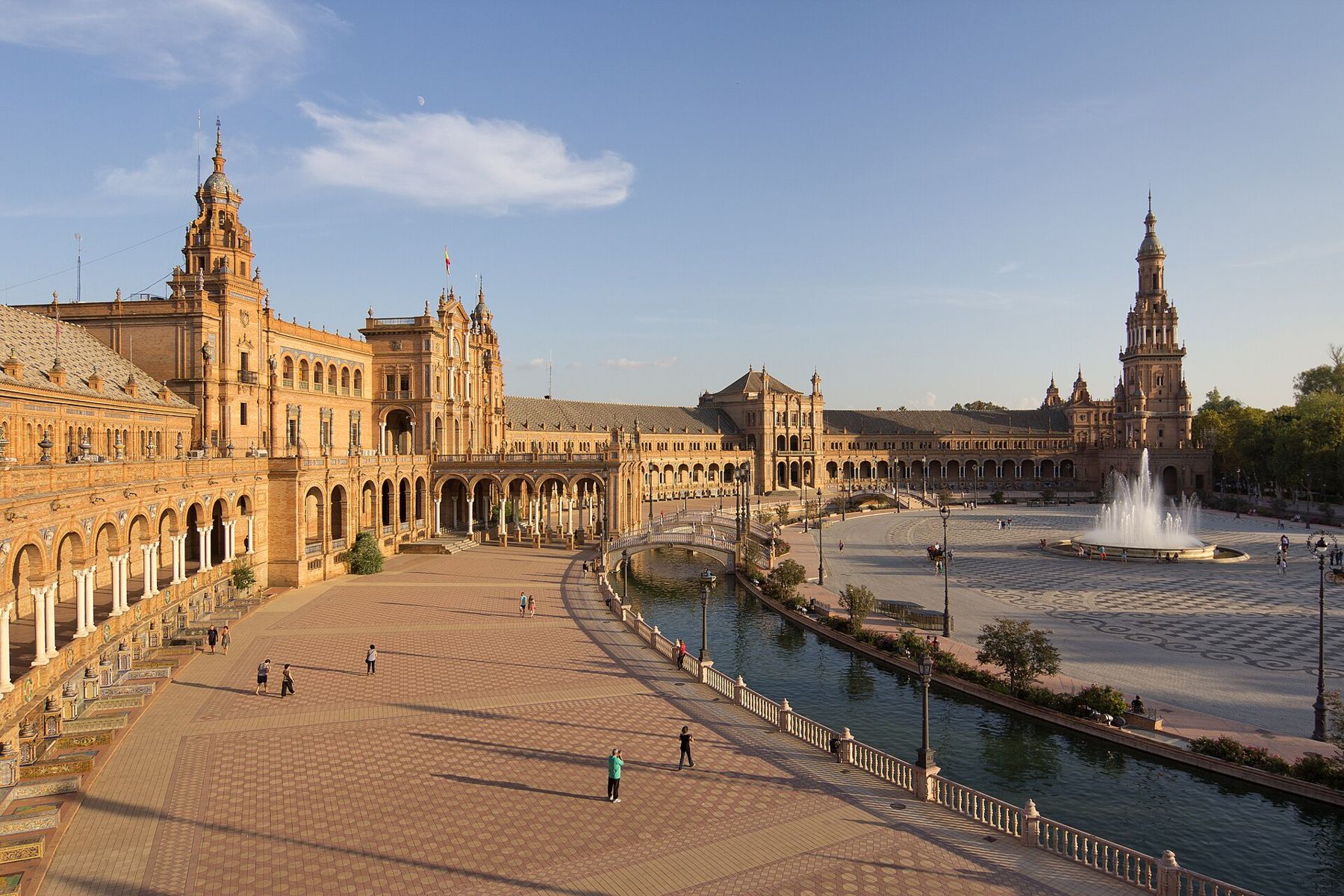
The Plaza de España was built for the Ibero-American Exposition of 1929, a world's fair meant to show off Spain and strengthen ties with the countries of Latin America. The architect Aníbal González designed it as a vast half-circle of brick buildings embracing a square, with towers at each end, a central building and a canal running around the curve, crossed by four bridges.
The style mixes Renaissance and Moorish revival, with a lot of brick, marble and painted ceramic tiles, a craft for which Seville is famous. The scale is meant to impress, and it does. The half-circle is often read as Spain opening its arms to its former colonies, a symbolism that sits more uneasily today but is part of the story.
The tiled alcoves
Along the base of the curved building runs a series of alcoves, each dedicated to a Spanish province, with a tiled map, a scene from its history and benches decorated with ceramic tiles. Spanish visitors often look for their own province and take a photo on its bench, which is a pleasant thing to watch and to do. The alcoves run in alphabetical order, so it is easy to find a particular one.
Bridges, balconies and the canal
The four bridges over the canal are covered in blue and white ceramic tiles and balustrades. Climb onto one for a good view of the curve of the buildings. On the canal, small rowing boats can be hired; the price and opening hours are set by the operators and change, so check on the spot if you want one.
The galleries along the first floor of the building can be walked in places, giving a shaded viewpoint over the square. Whether those upper areas are open depends on the day and on works, so treat them as a bonus.
Which months work
The plaza is wide open, and the brick and paving reflect heat, so the middle of a summer afternoon is hard work. Come in the morning or from late afternoon into evening, when the light turns the brick warm orange and the shadows soften. Early morning is also when the plaza is least crowded, which helps if you want photographs without people in every frame.
The square is generally accessible at all times, but the park around it has its own arrangements, and lighting after dark is limited in places. As in any big public space, keep an eye on bags, and expect street sellers and performers, especially at busy times.
On screen
The plaza has been used as a film location, most famously in a Star Wars film of the early 2000s and earlier in Lawrence of Arabia. It often appears in travel advertising for Spain. You will see why the moment you arrive: few public squares are this theatrical.
Getting there on foot
From the cathedral, walk south past the Alcázar walls and the old tobacco factory, now part of the university, to the edge of María Luisa Park. The route takes about twenty minutes. A tram line runs part of the way, and buses stop nearby, but the walk is pleasant and mostly flat.
Enter the park and the plaza appears suddenly between the trees, which is part of the effect: one moment you are in a garden, the next you are facing a quarter-mile of brick and tile.
Photographs and manners
The plaza is popular with photographers, wedding parties and performers, including flamenco dancers who perform in the shade of the arcades. If you watch a performance, a small contribution is customary but never required. Ask before you photograph people up close.
Cycling, horse carriages and crowds share the space at busy times. Keep to the edges if you are walking slowly, and watch for bicycles crossing the open square.
How long to give it
A quick look at the plaza takes twenty minutes. A proper visit, walking the full curve, finding a few provincial alcoves, crossing a bridge and climbing to the gallery where open, takes an hour or more. Add the park around it and the morning or evening is easily filled. There is no need to rush: the plaza is at its best when you sit on one of the tiled benches and watch the light move across the brick.
Bring water in warm months. The square has little shade at midday, and the walk back to the old centre is in the open sun for part of the way.
Families with children will find plenty of space to run, and the bridges and canal keep young visitors interested for longer than most monuments.
What is around it
María Luisa Park, which surrounds the plaza, is one of the best places in Seville to escape the heat. It has shaded paths, fountains, ponds and pavilions left over from the 1929 exposition, some now housing museums. A walk through the park and around the plaza makes a relaxed half-day.
For fitting the plaza into a longer stay, see how many days you need in Seville. If you are timing your visit around the weather, read whether May is too hot for Seville first.
Next question: What time should you get to Fushimi Inari?